Hydration Importance
Proper hydration is crucial for athletes as it directly impacts their performance on the field or in the gym. Without adequate fluids, the body cannot function optimally, leading to a decrease in strength, endurance, and overall athletic abilities.
Significance of Hydration in Athletic Performance
- Hydration helps regulate body temperature during exercise, preventing overheating.
- Water is essential for lubricating joints and cushioning organs, reducing the risk of injury.
- Proper hydration supports cardiovascular function and nutrient transport to muscles for energy production.
Dehydration and its Impact on Physical Abilities
- Dehydration can lead to muscle cramps, fatigue, and dizziness, affecting performance and endurance.
- Loss of electrolytes through sweat can disrupt nerve function and impair muscle contractions.
- Even mild dehydration (as little as 2% loss of body weight) can significantly decrease athletic performance.
Recommended Daily Water Intake for Athletes
Hydration and its impact on athletic performance – Athletes should aim to consume at least 8-10 cups (64-80 ounces) of water per day, in addition to replacing fluids lost during exercise. Individual water needs may vary based on factors like body size, activity level, and environmental conditions.
Role of Electrolytes in Maintaining Hydration Levels
Electrolytes such as sodium, potassium, and magnesium play a crucial role in fluid balance and hydration. They help regulate the body’s water content, muscle function, and nerve signaling. Athletes can replenish electrolytes through sports drinks, coconut water, or electrolyte supplements to support hydration and performance.
Impact of Hydration on Athletic Performance
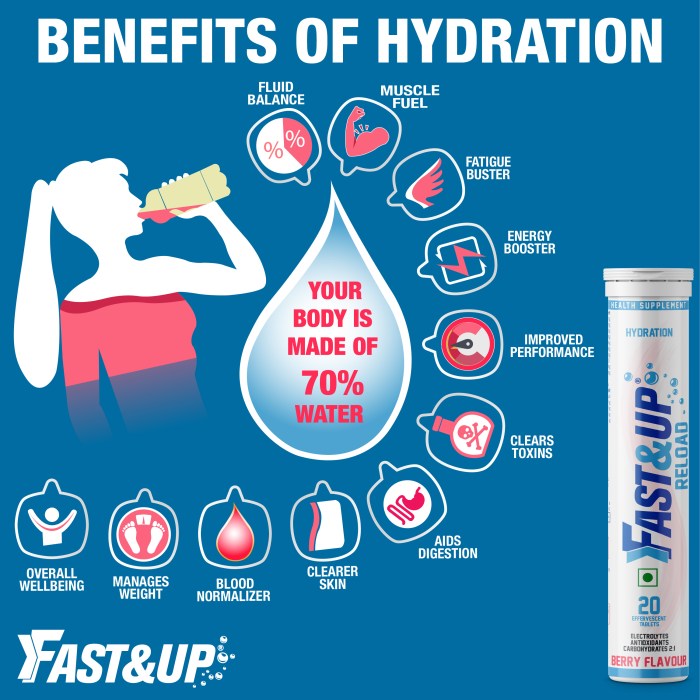
Maintaining proper hydration levels is crucial for athletes as it directly impacts their endurance, stamina, performance, and overall recovery.
Hydration Levels and Endurance
- Hydration plays a key role in maintaining optimal endurance levels during physical activities.
- Dehydration can lead to decreased endurance, making it harder for athletes to perform at their best.
- A well-hydrated body can sustain physical exertion for a longer duration compared to a dehydrated one.
Performance Comparison: Hydrated vs. Dehydrated Athletes
- Hydrated athletes tend to perform better in terms of speed, strength, agility, and overall athletic performance.
- Dehydrated athletes experience reduced coordination, muscle cramps, fatigue, and decreased cognitive function.
- Proper hydration can give athletes a competitive edge by enhancing their physical and mental performance.
Hydration Strategies
- Pre-workout: Drink water or a sports drink 2-3 hours before exercise to ensure proper hydration levels.
- Mid-workout: Consume small amounts of water or electrolyte drinks during breaks to replenish fluids lost through sweat.
- Post-workout: Rehydrate with water, sports drinks, or coconut water to replace lost fluids and electrolytes.
Hydration and Muscle Recovery
- Hydration is essential for muscle recovery as it helps transport nutrients to muscles and remove waste products.
- Proper hydration post-workout aids in reducing muscle soreness and promoting faster recovery.
- Dehydration can delay muscle recovery, leading to prolonged soreness and increased risk of injury.
Hydration and Fitness Routine
Staying properly hydrated is crucial when incorporating exercise into your daily routine. It can significantly impact your performance and overall health. Let’s explore how to create a hydration plan tailored to different types of workouts and the importance of staying hydrated for optimizing training results.
Hydration Plan for Different Types of Workouts
- Low-Intensity Workouts (e.g., yoga, walking): Drink water throughout the day to stay hydrated. Aim for at least 8-10 cups of water daily.
- Moderate-Intensity Workouts (e.g., jogging, cycling): Hydrate before exercise by drinking 16-20 ounces of water 1-2 hours before. During exercise, drink 7-10 ounces every 10-20 minutes.
- High-Intensity Workouts (e.g., HIIT, weightlifting): Pre-hydrate with 20-24 ounces of water 2-3 hours before. Consume electrolyte-rich drinks during and after exercise to replenish lost minerals.
Tips for Staying Hydrated
- Carry a reusable water bottle to track your water intake throughout the day.
- Monitor your urine color – pale yellow indicates proper hydration.
- Include hydrating foods in your diet such as watermelon, cucumber, and oranges.
Importance of Hydration for Optimizing Training Results
Proper hydration helps regulate body temperature, transport nutrients, and remove waste from cells, leading to improved performance and faster recovery post-workout. Dehydration can result in fatigue, muscle cramps, and decreased endurance.
Hydration-Friendly Snacks for Pre and Post-Workout
- Pre-Workout: Greek yogurt with berries, a banana with almond butter, or a smoothie with spinach and coconut water.
- Post-Workout: Chocolate milk, a protein shake with water, or a turkey and avocado wrap with whole-grain bread.
Hydration and Nutritional Supplements

Proper hydration is essential for optimal athletic performance, and nutritional supplements can play a key role in maintaining fluid and electrolyte balance during intense physical activity.
Role of Sports Drinks
Sports drinks are formulated to replenish fluids and electrolytes lost through sweating during exercise. They typically contain a mixture of water, carbohydrates, and electrolytes like sodium and potassium.
- They help maintain hydration levels and provide a quick source of energy to fuel muscles during workouts.
- Sports drinks are especially beneficial for prolonged or intense exercise lasting more than 60 minutes.
- However, excessive consumption of sports drinks high in sugar can lead to unnecessary calorie intake and potential negative health effects.
Water vs. Sports Drinks
While water is essential for hydration, sports drinks offer additional benefits during exercise.
- Sports drinks are more effective than water in replacing lost electrolytes and carbohydrates, making them ideal for endurance activities.
- Water is generally suitable for shorter or less intense workouts where electrolyte replacement is not a major concern.
- Individual hydration needs may vary based on factors like sweat rate, exercise intensity, and environmental conditions.
Benefits and Drawbacks of Hydration Supplements
Hydration supplements like electrolyte tablets or powders can provide a convenient way to replenish electrolytes without the added sugars found in some sports drinks.
- They are portable, easy to use, and can be customized to individual hydration needs.
- However, relying solely on hydration supplements may not provide all the necessary nutrients and hydration benefits of whole foods.
- It’s essential to balance the use of hydration supplements with a varied diet rich in fruits, vegetables, lean proteins, and whole grains.
Incorporating Hydration Supplements into Diet, Hydration and its impact on athletic performance
Integrating hydration supplements into a balanced diet can enhance overall hydration and performance.
- Consider using hydration supplements during high-intensity workouts, endurance events, or in hot and humid conditions where electrolyte loss is increased.
- Consult with a nutritionist or healthcare provider to determine the most appropriate type and amount of hydration supplements for your individual needs.
- Remember that hydration supplements should complement, not replace, a well-rounded diet to support overall health and athletic performance.
Hydration and Disease Prevention
Proper hydration plays a crucial role in disease prevention by supporting various bodily functions and enhancing overall health.
Supporting the Immune System
- Maintaining adequate hydration levels helps in the proper functioning of the immune system.
- Water is essential for the production of lymph, which carries white blood cells and other immune system cells throughout the body to fight off infections.
- Staying hydrated can help prevent illnesses by supporting the body’s defense mechanisms.
Preventing Heat-Related Illnesses
- Proper hydration is vital in regulating body temperature, especially in hot and humid conditions.
- Dehydration can lead to heat-related illnesses such as heat exhaustion and heat stroke.
- Drinking enough water and electrolyte-rich fluids can help prevent these conditions during intense physical activity or exposure to high temperatures.
Staying Hydrated in Hot and Humid Conditions
- Drink water regularly throughout the day, not just when you feel thirsty.
- Avoid excessive caffeine and alcohol consumption, as they can contribute to dehydration.
- Consider consuming fruits and vegetables with high water content to stay hydrated.
Reducing the Risk of Kidney Stones
- Proper hydration is essential for maintaining kidney function and preventing the formation of kidney stones.
- Drinking an adequate amount of water helps dilute substances in the urine that can lead to the development of kidney stones.
- By staying hydrated, individuals can reduce the risk of kidney stone formation and promote overall kidney health.
Hydration and Mental Clarity: Hydration And Its Impact On Athletic Performance
When it comes to mental clarity, hydration plays a crucial role in ensuring optimal cognitive function. Dehydration can have a significant impact on focus, concentration, decision-making, and overall mental well-being. It is essential to understand how staying hydrated can help improve mental alertness and productivity.
Connection between Hydration and Cognitive Function
Maintaining proper hydration levels is essential for supporting cognitive function. The brain is made up of about 75% water, and dehydration can lead to a decrease in cognitive performance. When dehydrated, the brain has to work harder to perform simple tasks, resulting in decreased focus, concentration, and decision-making abilities.
Hydration Tips for Improving Mental Alertness
– Drink an adequate amount of water throughout the day to stay hydrated.
– Carry a reusable water bottle with you to ensure easy access to water at all times.
– Consume hydrating foods such as fruits and vegetables that have high water content.
– Avoid excessive consumption of caffeinated or sugary beverages that can lead to dehydration.
– Monitor your urine color to gauge hydration levels – pale yellow indicates proper hydration.
Importance of Staying Hydrated for Mental Well-Being
Staying hydrated is not only essential for physical health but also crucial for mental well-being. Dehydration can lead to symptoms such as headaches, fatigue, irritability, and mood swings, all of which can impact mental clarity and overall cognitive function. By prioritizing hydration, you can enhance your mental performance and maintain optimal brain function.
FAQ Section
How much water should athletes drink daily?
Athletes should aim to drink about 8-10 glasses (64-80 ounces) of water per day, adjusting based on their level of activity and sweat loss.
What are some hydration-friendly snacks for pre and post-workout?
Some examples include fruits like watermelon, oranges, or berries, yogurt, smoothies, or nuts and seeds.
Are sports drinks more effective than water during exercise?
Sports drinks can be beneficial during intense exercise lasting longer than an hour as they replenish electrolytes lost through sweat.
How does hydration impact mental clarity?
Proper hydration is crucial for cognitive function, as dehydration can impair focus, concentration, and overall mental performance.
What are some strategies for staying hydrated in hot conditions?
Carrying a water bottle, wearing light clothing, and consuming electrolyte-rich fluids can help maintain hydration in hot weather.


More Stories